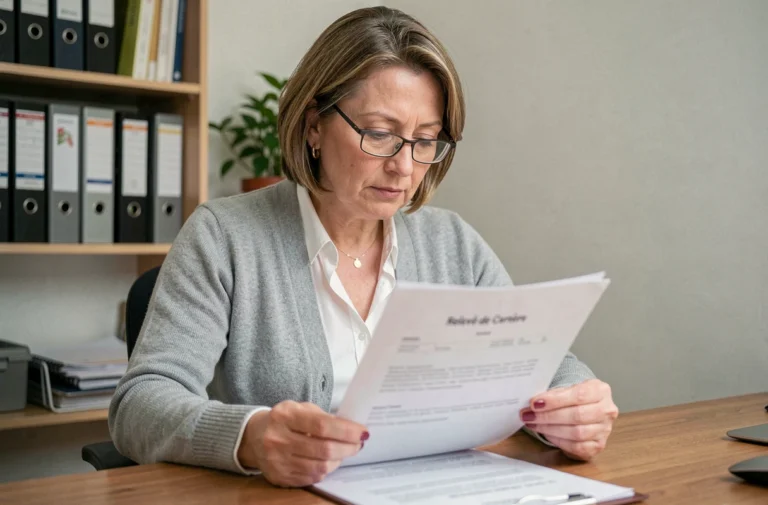
Comparing support systems for seniors often involves navigating through administrative acronyms, poorly coordinated services, and opaque eligibility criteria. However, the daily lives of seniors and their loved ones depend on concrete choices: what type of home assistance to prioritize, how to coordinate financial aid and housing adaptations, and most importantly, which recent regulatory levers are truly changing the game.
Home autonomy services: what the 2023 decree has changed
Decree No. 2023-608 of July 13, 2023, has restructured the former home help and care services into two distinct categories. The SAD “aid” covers assistance with daily tasks (meals, cleaning, shopping). The SAD “mixed” combines this aid with nursing care, bringing together under one operator what was previously handled by separate structures.
This distinction has a direct impact on the coordination of care. With a mixed SAD, a single contact person manages both the caregiver and the nurse visiting the home. For family caregivers, this reduces the number of procedures and limits disruptions in support.
Resources like seniorium.fr help identify the referenced structures based on the type of service sought, whether it is for occasional help or for support combining aid and care.
| Criteria | SAD aid | SAD mixed |
|---|---|---|
| Scope | Home help (meals, cleaning, companionship) | Home help + nursing care |
| Coordination | One social worker | Social worker + caregiver under one service |
| Target audience | Seniors with mild to moderate loss of autonomy | Seniors requiring regular medical follow-up at home |
| Regulatory framework | Decree No. 2023-608 | Decree No. 2023-608 |
Simplification of autonomy aid procedures: common form and global assessment
One of the major obstacles to staying at home remains the administrative complexity. The Retirement Insurance, CNSA, and MSA have deployed a common form that allows for requesting, in a single process, assistance from retirement funds or departmental APA. This system is part of the Departmental Public Service of Autonomy, created by the law of April 8, 2024.
In practical terms, a senior or their loved one no longer needs to submit separate applications to each organization. The unique form automatically directs the request to the appropriate contact based on the assessed level of dependency.
Global assessment of home needs
Since 2026, the Retirement Insurance has been rolling out a global assessment of home needs in all regions. This approach is not limited to individuals already identified as dependent. It also targets seniors whose fragility is not yet apparent, in a preventive logic.
The assessment examines the situation as a whole: housing, access to care, social connections, nutrition. It goes beyond a simple inventory of equipment to propose a coordinated action plan.
- A single form to request APA or assistance from the retirement fund, without separate procedures by organization
- An assessment covering housing, health, nutrition, and social connections, including for seniors who are not yet dependent
- Connection to the Departmental Public Service of Autonomy, which centralizes the orientation of requests
Adapting housing for aging: a structural challenge
Housing adaptation is often presented as a list of minor works (grab bars, lighting, removal of rugs). In reality, the scope of the issue is structural. The majority of homes occupied by seniors were not designed to accommodate a wheelchair, walker, or simply allow safe movement between rooms.
Which adaptations have a measurable impact on safety
Not all adaptations are equal in terms of fall prevention. The most effective interventions combine several modifications simultaneously rather than an isolated adjustment.
- Replacing the bathtub with a walk-in shower, combined with a non-slip floor and grab bars
- Installing motorized roller shutters to eliminate reaching for high objects, a frequent source of imbalance
- Reorganizing the kitchen to place commonly used utensils between waist and shoulder height, reducing bending and stretching efforts
- Installing automatic light pathways between the bedroom and bathroom for nighttime movements
Funding for these works can come from APA, MaPrimeAdapt’, or local aids. However, the processing times vary significantly from one department to another, which requires anticipating the request well before the loss of autonomy becomes critical.
Decline in the number of home aid beneficiaries: what the data reveals
In 2025, the number of beneficiaries of home aid for the elderly decreased for the first time since 2020. The number of beneficiaries of APA at home also declined during the same period.
This reversal raises questions. Several factors may explain it: recruitment difficulties in the home care sector or persistent complexity in procedures despite efforts to simplify.
For family caregivers, this trend means that obtaining a spot or an intervention slot may take longer than before. Anticipating requests, seeking the global assessment at the first signs of fragility, and relying on mixed SADs when medical follow-up is necessary remains the most reliable combination to secure the home stay of a senior.
The regulatory framework is evolving in the right direction with the April 2024 law and the common form. The question is no longer so much about what solutions exist, but about measuring the gap between their theoretical availability and their actual accessibility on the ground.