The wedding decoration market is undergoing a subtle transformation. Catalogs of decorative objects are giving way to a global scenography logic, where light, materials, and the guests’ journey form a coherent whole. The service providers interviewed by the Sposami Wedding Content Creator collective describe projects conceived as immersive experiences, far from the accumulation of pretty elements placed on tables. This paradigm shift redefines how couples approach their wedding decoration.
Floral Decor Rentals: An Alternative That Redefines Budgets
The question of the floral budget remains one of the most sensitive aspects of wedding planning. Fresh flowers often represent a significant portion of expenses, with a lifespan limited to just a few hours.
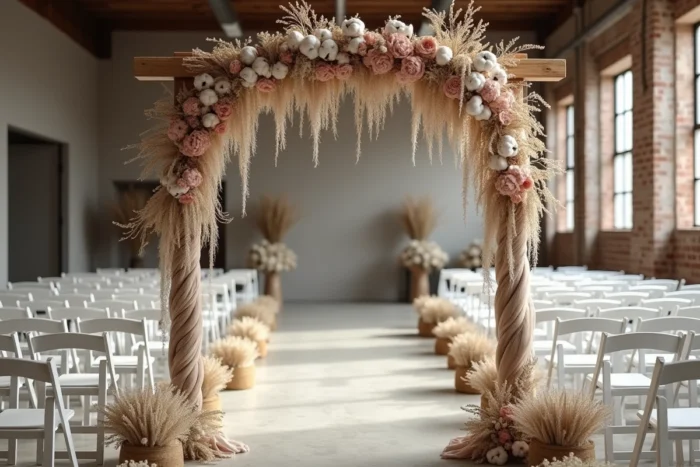
Providers like Jolis Songes now offer high-end artificial flower rentals: floral arches, large bouquets, complete green walls, delivered, installed, and collected after the reception. The visual result rivals that of fresh compositions, without the floral waste that accompanies traditional weddings.
This approach addresses two simultaneous concerns. On one hand, it reduces the ecological footprint associated with imported cut flowers. On the other hand, it frees up a budget that couples can reallocate to other areas, such as lighting or sound scenography. To explore other staging options, the decoration on Mariages du Monde gathers useful resources on different styles and atmospheres.
Feedback from the field diverges on one point: the perception of guests. Some couples report that no one notices the difference, while others note that the absence of floral scent subtly alters the atmosphere of the ceremony. The choice depends on the weight you give to this sensory dimension.
Wedding Color Palettes 2026: Two Coexisting Trends
Recent color trends for weddings reveal a dual dynamic rarely analyzed in classic guides.
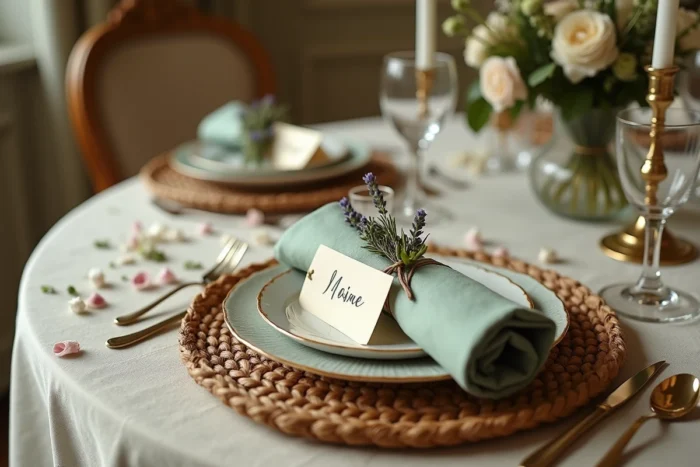
The first trend favors natural and timeless palettes. Sage, beige, ecru, earth tones: these shades are paired with noble materials like linen, stone, or raw wood. They suit bohemian or minimalist weddings and photograph well over time.
The second trend, driven by the direct influence of Instagram and TikTok, brings forth bright pastels designed for video capture. Powder pink, very light lilac, butter yellow, light sage green: these hues are chosen for how they capture natural light and render on screen. This is no longer a purely aesthetic choice; it is a technical choice dictated by social media presentation.
How to Decide Between the Two Approaches
The reception venue often settles the debate. A stone estate with dim lighting does not support overly light pastels, which will appear washed out. In contrast, an open space bathed in natural light enhances these shades.
The season also plays a role. Earth tones and sage are better suited for autumn weddings, while bright pastels reach their full potential between April and September, when the light is more generous.
Immersive Scenography: Going Beyond Table Decoration
The most structuring trend for current weddings is the shift from a decorative logic to a scenographic logic. The difference can be summed up in one sentence: decoration dresses a space, while scenography creates a journey.
In practical terms, providers who work in scenography think of the wedding as a succession of moments. The arrival of guests, the ceremony, the cocktail, the dinner, and the evening all have different lighting, sound ambiance, and visual elements. Each transition is carefully planned.
- Sensory corners (fragrance bar, tactile material wall, calligraphy corner) are gradually replacing the classic photobooth and creating interaction
- Lighting becomes a decorative element in its own right: filament garlands, mass candles, adjustable spots that change color temperature between dinner and dancing
- Ambient sound (background playlist, acoustic musicians during the cocktail) contributes to the overall coherence as much as flowers or tableware
This approach comes at a cost. It requires working with a decorator or wedding designer who masters space management, not just object selection. The available data does not allow for precise budgeting differences, but couples who choose this option report a significantly higher investment than for classic decoration.
Rustic or Vintage Wedding Decoration: What the Theme Really Implies
Choosing a rustic or vintage theme is not just about placing Mason jars on burlap tablecloths. A coherent decorative theme involves choices regarding furniture, tableware, textiles, and lighting, not just centerpieces.
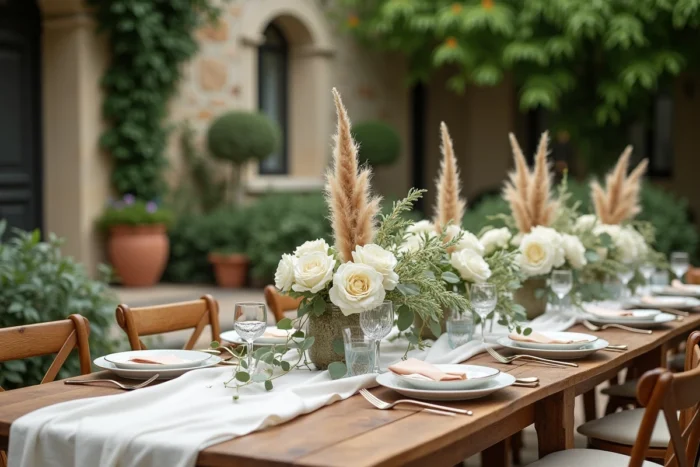
The rustic style works with mismatched seating (wooden chairs, benches, cushions on barrels), raw materials, and floral compositions made from dried flowers, gypsophila, or pampas grass. Vintage, on the other hand, requires more demanding sourcing: antique tableware, patinated candelabras, retro furniture.
The Trap of Stylistic Accumulation
Mixing rustic, bohemian, and vintage styles in the same space often produces a confusing result. The basic rule remains to choose a dominant style and add only one secondary touch. A rustic wedding accented with gold works. A rustic-bohemian-vintage-industrial wedding loses all clarity.
The reception venue naturally guides this choice. A stone barn calls for rustic or country styles. An urban loft supports industrial or minimalist styles. Forcing a theme that contradicts the venue’s architecture requires a disproportionate decorative (and financial) effort for a result that is rarely convincing.
The most successful wedding decoration is one that interacts with its environment rather than masking it. The venue is not a neutral container to fill; it is the first element of the decor.