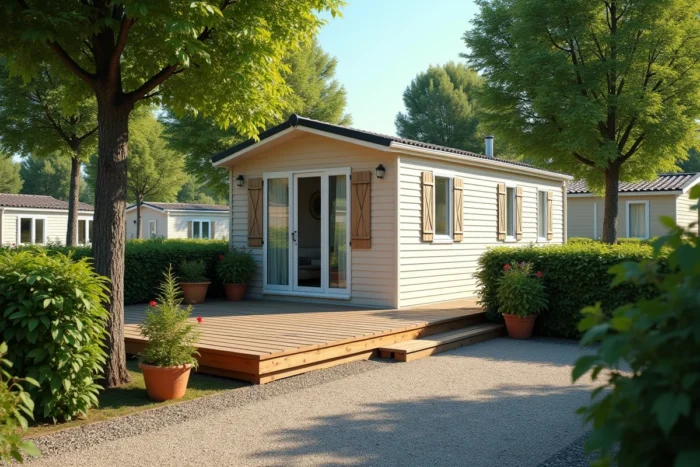
Buying a mobile home on a dedicated plot is increasingly appealing to individuals seeking an affordable second residence. However, the choice of location, whether a campsite or a residential leisure park (PRL), determines very different legal, financial, and practical realities. Understanding these distinctions before signing helps avoid disappointments in the long run.
Plot Status: What the Contract Changes in Practice
The fundamental difference between a campsite and a PRL lies not in the mobile home itself, but in the legal status of land occupation. In a campsite, the buyer of the mobile home remains a tenant of the location. They sign a rental agreement with the manager, renewable under conditions set by the internal regulations.
In a PRL, two configurations coexist. Some parks operate on a rental model similar to campsites. Others allow for the purchase of the plot itself, with notarization and issuance of a title of ownership. This second option offers significantly greater legal security, as the owner holds a real right over the land.
Before committing to the purchase of a plot of land with a mobile home, verifying the administrative status of the site and urban planning permissions is a preliminary step that field feedback indicates is often overlooked by buyers.
Total Cost in Campsite and PRL: Underestimated Expenses
The displayed price of the mobile home represents only a fraction of the actual expense. Ongoing charges often weigh more heavily on the budget in the medium term than the initial amount.
Camping-Related Costs
In a campsite, the annual rent for the location varies depending on the location, size, and level of services. This rent may sometimes include entrance fees during the initial setup, charged for integrating the mobile home into the park. Transportation and setup on-site also incur significant logistical costs.
Some managers require the replacement of the mobile home after a certain age, which means planning for regular reinvestment. An apparently affordable purchase can become more expensive than a traditional second residence once all additional costs are factored in over the duration of the stay.
PRL Costs with Plot Purchase
In a PRL, acquiring the plot represents a higher initial investment (notarial deed, notary fees). However, the absence of location rent reduces the annual bill. Remaining are the co-ownership or park management fees, which cover the maintenance of common areas and infrastructure.
Field feedback varies on this point: some PRL owners report operating costs comparable to those of a high-end campsite, while others see significant savings over several years.
Resale of the Mobile Home: Campsite and PRL Facing Restrictive Clauses
The resale question deserves particular attention, as it affects the liquidity of the investment. In a campsite, the manager often controls the transferability of the mobile home through clauses included in the rental agreement for the location.
Common restrictions include:
- A right of preemption by the campsite on the resale, which may limit the buyer’s choice or the sale price
- A seniority clause requiring the removal of the mobile home after a certain number of years, which reduces its residual value
- The obligation to obtain the manager’s consent for any transfer, with no guarantee of acceptance
In a PRL with a title of ownership for the plot, resale is more akin to a traditional real estate transaction. The owner freely transfers their property without depending on a manager. However, the park regulations may impose constraints on the type of residence allowed, indirectly framing the resale market.
Opening Duration and Actual Use: A Often Decisive Criterion
The period during which the mobile home is accessible varies greatly depending on the type of structure. A seasonal campsite limits occupancy to a few months a year (generally from April to October, depending on the establishment). Year-round campsites exist but remain in the minority.
PRLs more frequently offer year-round opening, allowing for regular use as a second residence, including in winter. For a buyer considering off-season stays or occupancy spread over twelve months, this difference weighs heavily in the decision.
However, it is important to distinguish between the administrative opening of the park and the actual habitability of the mobile home in cold periods. The insulation of a standard mobile home is not designed for prolonged winter use, which can lead to significant heating costs and notable discomfort.
Checks to Make Before Signing
The main risk lies less in the choice between a campsite and a PRL than in the insufficient reading of the contract and the internal regulations. Several points deserve careful examination:
- The exact status of the site (classified campsite, declared PRL, leisure land without authorization) and the compliance of urban planning permissions
- The clauses of the rental or purchase agreement regarding duration, renewal, termination, and transfer conditions
- The maintenance, replacement, or compliance obligations imposed by the manager
- The possibility or not of installing outdoor amenities (terrace, shelter) without violating regulations on mobile leisure residences
Decree No. 2007-18 of January 5, 2007, defines mobile leisure residences as habitable land vehicles intended for temporary or seasonal occupation. Any fixed installation (concrete terrace, blockwork veranda) contravenes this definition and exposes the owner to penalties.
Ultimately, the choice between a campsite and a PRL depends on the relationship one wishes to maintain with their investment: a vacation use regulated by an operator, or a more autonomous form of ownership with its own management constraints. Neither option eliminates the need to read each clause before committing.