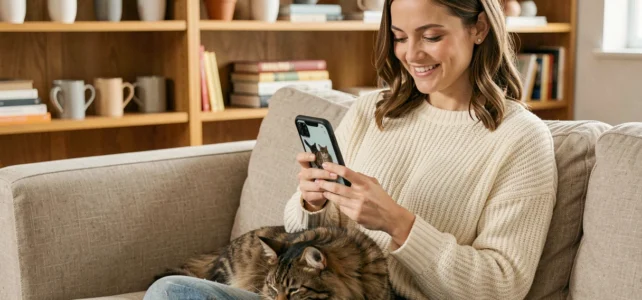
Aplouf is based on a principle of feline curation without algorithmic interference. While general social networks drown cat content in an advertising stream, the platform structures its exchanges around a system of photo challenges and community voting that places the feline at the center, not the advertiser. For cat owners looking for a readable and noise-free space, this positioning changes the game.
Algorithmic Transparency and AI Act: What Aplouf Avoids by Design
The transparency obligations of the European AI Act come into effect on August 2, 2026, for chatbots and synthetic content. AI systems that interact with users must now disclose their nature, and some generated or manipulated content requires machine-readable labeling.
This regulatory framework highlights a problem that cat lovers know well on large platforms: the line between human content and automated content becomes blurred. On TikTok or Instagram, distinguishing a photo shared by an owner from an AI-generated visual or a sponsored post requires constant vigilance.
Aplouf bypasses this difficulty through its very structure. The platform operates on a principle of direct participation: members submit their own photos, vote, and comment. No feed generated by a recommendation algorithm, no synthetic content inserted into the stream. For a cat lover tired of guessing what is authentic in their feed, this algorithm-free architecture represents a concrete refuge.
We observe that niche communities based on the authenticity of human sharing are becoming more attractive as European regulations expose the opacity of large platforms. Aplouf fits into this dynamic without needing to adapt: its model was already in line with the spirit of the text.

Feline Moderation on Aplouf: A Filter That Social Networks Do Not Offer
On Facebook or TikTok, videos where cats are placed in stressful situations sometimes circulate for days before being removed. Animal protection associations regularly report this phenomenon of delayed moderation in the face of ambiguous content involving animals. The algorithm rewards engagement, not animal welfare.
Aplouf takes a different approach. Shared content goes through community validation that is not the passive thumbs-up of traditional networks: votes focus on the quality of the photo and the respect for the cat. A cat forced into a costume or splashed with water for laughs does not pass the community’s social filter, as members vote with feline knowledge.
For those who want to discover Aplouf with Animaloo, the comparison with general social networks highlights a structural gap in the management of animal content.
This peer moderation system works because the community shares a common frame of reference: knowing how to recognize a stressed cat, identifying a posture of discomfort, differentiating spontaneous play from forced staging. On a general platform, this skill is diluted in a massive and heterogeneous audience.
Feline Gamification: Photo Challenges and Points on Aplouf
Aplouf’s loyalty mechanism is based on integrated gamification. Owners participate in thematic challenges (fur colors, postures, favorite window of the cat) and accumulate points based on the votes received.
This system differs from feline photo contests on Instagram in several concrete ways:
- The challenges are structured by the platform itself, not by third-party accounts that monetize their audience. No sponsored link in the caption, no hidden kibble partnerships.
- The ranking is based on votes from active members, not on the number of followers. An account created the day before has as much visibility as an older member if their photo is liked.
- The points mechanism rewards consistency, not virality. Posting a photo every week is worth more than a single snapshot that goes viral.
For a cat owner who used to post on social networks and saw their photos drowned under brand reels, this operation puts authentic content back in the spotlight.
Limits of Aplouf Against the Power of Social Platforms
Aplouf does not replace a social network. Its community remains modest in size compared to feline Facebook groups that gather hundreds of thousands of members. The network effect works in favor of large platforms: finding a recommended veterinarian, identifying a breed, getting quick feedback on unusual behavior is faster in an active group than on a niche platform.
Aplouf is not a veterinary advice tool. The health sections present on the platform do not substitute for professional consultation, and managing feline emergencies necessarily goes through other channels.
The market for niche platforms for pets has shown a long-term trend in recent years. But the long-term viability of these spaces depends on their ability to maintain a critical mass of active members. A photo challenge with three participants does not create excitement.

We recommend considering Aplouf as a complement, not a substitute. The interest lies in the quality of feline interaction, not in the volume. A cat owner looking for a quiet space to share their photos without being subjected to targeted advertising will find exactly what they expect. Those who want to reach a wide audience or get quick answers to an animal health question will keep one foot on general networks.
The appeal of Aplouf lies in what it refuses as much as in what it offers: no algorithm, no ads, no stressful content for cats. For cat lovers weary of digital noise, it is precisely this editorial silence that makes the difference.