
A personalized wedding is not based on a decorative theme chosen from a catalog. It is built from concrete decisions made in a specific order that reflect the couple’s real priorities. Organizing a wedding calmly requires distinguishing what structures the day (budget, venue, timeline) from what decorates it, and treating these two levels separately.
Wedding thread: replacing the theme with personal coherence
Since 2025-2026, industry professionals have observed a clear decline in fixed themes such as “rustic,” “bohemian,” or “industrial.” Couples are increasingly looking to create a celebration that is coherent with their story, their travels, and their shared memories, rather than a wedding modeled after a Pinterest mood board.
The difference is structural. A theme imposes pre-fabricated aesthetic choices (color palette, type of furniture, floral style). A personal thread starts from lived experiences and guides decisions: the music, the menu, the ceremony texts, the choice of venue. Each element tells something concrete.
To define this thread, a simple method works: list together, without filter, five moments or places that matter in the relationship. A restaurant, a city, a song, a dish.
Then, finding what connects these elements (a country, an atmosphere, a culinary style) provides a stronger axis than a visual theme. Providers with resources dedicated to personalization, such as espace-mariage.fr, facilitate this approach by allowing comparisons of options aligned with a project rather than a trend.
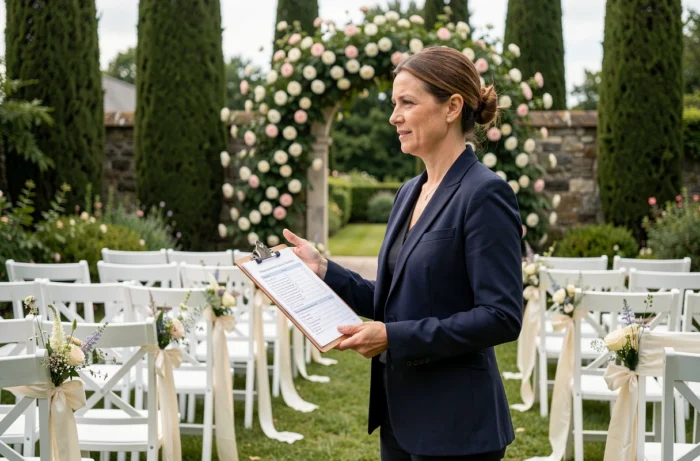
Wedding budget: prioritizing items according to their real impact
The classic budget breakdown (venue, catering, photography, dress, decoration) is well-known. What is less known is that not all items have the same effect on the memory that a wedding leaves for guests and the couple.
Three items directly influence the experience on the big day:
- The caterer and the service, because the quality of the meal and the pace of service set the atmosphere of the evening much more than table decoration.
- The music and entertainment (DJ, band, playlist), because a twenty-minute lull between two key moments empties the dance floor and breaks the collective energy.
- The ceremony itself (secular, religious, civil), because it is the only moment when all guests’ attention is focused on the couple.
The dress, stationery, and guest favors matter, but their impact on the collective experience remains limited. A couple with a constrained budget should focus spending on these three items and cut back on the rest, rather than spreading amounts evenly.
Margin for unforeseen events
Planning a margin for unforeseen events prevents cutting back on a priority item in case of late additional costs. This reserve covers last-minute adjustments: weather changes requiring a tent rental, replacement of a failing vendor, adding guests after sending invitations.
Social media and wedding planning: managing inspiration overload
Instagram, Pinterest, and TikTok have become almost essential in preparations. Their massive use creates a documented problem: the accumulation of isolated ideas leads to a loss of coherence in the overall project and increases pressure to meet an unrealistic standard.
An OpinionWay survey relayed by France Inter indicates that the majority of French people believe social media puts pressure on couples getting married. The mechanism is simple: each screenshot or saved pin adds a visual reference disconnected from others, from the budget, and from the actual venue.
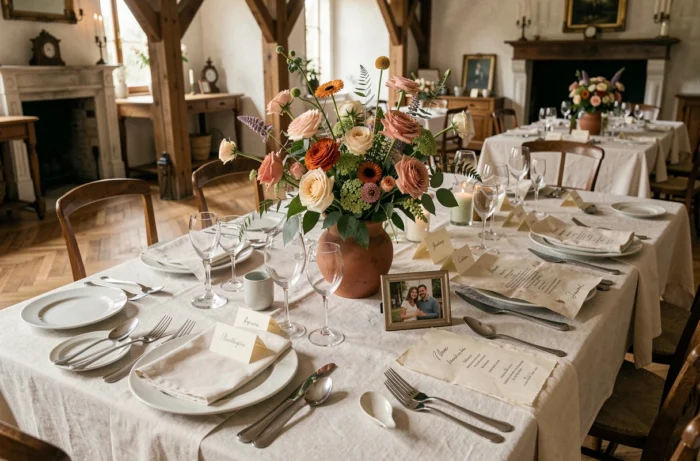
To limit this effect, a sorting discipline is necessary early in the preparations. Keep one board or folder per item (flowers, attire, table), limit sources to two or three accounts followed per category, and regularly delete outdated captures. The goal is to move from a collection of images to a clear brief for each vendor.
When to delegate visual oversight
A wedding planner or professional decorator can take charge of this curation phase. The couple provides their raw references, the vendor filters them, checks technical and budget feasibility, and then proposes a coherent direction. This delegation reduces stress related to constant comparison with weddings seen online.
Personalized secular ceremony: what makes it memorable
The secular ceremony is the format that offers the most latitude for personalizing a wedding. It is not framed by any liturgical protocol, meaning that the structure, texts, duration, and participants are entirely chosen by the couple.
Three elements distinguish a memorable secular ceremony from a generic one:
- The texts read by loved ones: a personal testimony of three minutes touches more than a poem found online. Asking speakers to share a specific memory with the couple creates a much stronger effect.
- The symbolic ritual: whether it’s a sand ritual, a planting, or sealing a box, the ritual works when it is linked to the couple’s story, not when it is chosen for its photographic aesthetics.
- The controlled duration: a secular ceremony that exceeds thirty-five minutes loses the attention of part of the audience. It’s better to have three well-prepared interventions than seven consecutive readings.
Preparing speakers in advance, giving them a duration framework, and reviewing texts together avoids lengthiness and repetitions on the big day.
The last point to decide is the location of the secular ceremony. If it takes place at the same site as the reception, the transition from one time to another occurs without additional transport or logistics. If it occurs in a distinct space (public garden, beach, forest), municipal authorization may be required depending on the municipality, and the travel time for guests must be integrated into the day’s timeline.