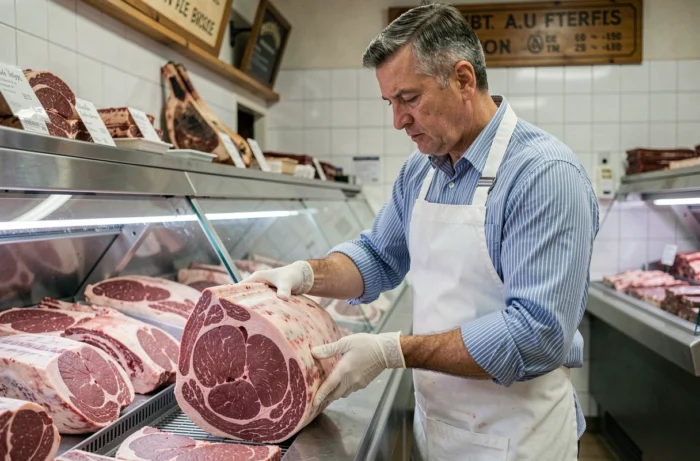
The choice of the cut and type of meat alone determines the texture, residual fat content, and cooking stability of the merguez. Before discussing spices or casings, it is the raw material that sets the specifications.
Fat content and grinding size: the two parameters that condition the merguez
A merguez that bursts on the barbecue or produces a watery juice in the pan almost always reveals an imbalance between lean and fat. We recommend a ratio close to 70% lean to 30% fat, measured before seasoning.
Below 20% fat, the mixture lacks binding and the sausage dries out within the first minutes of cooking. Above 35%, the merguez shrinks excessively and the natural sheep casing struggles to contain the rendered fat.
The grinding size plays a complementary role. A 6 mm plate produces a fine enough grain for the fat to distribute evenly in the mixture, without creating lipid pockets that melt suddenly under heat. Switching to an 8 mm plate yields a more rustic result, with a more pronounced chew, but requires prolonged kneading to prevent the filling from breaking down in the casing.
Before choosing the meat for merguez, it is necessary to assess the visible fat content on the cut and adjust the grinding size accordingly. It is this combination that differentiates a successful artisanal merguez from a simple tube of spiced ground meat.
Beef, lamb, or a mix: what type of meat for which merguez
Lamb: the traditional aromatic profile
Lamb shoulder remains the reference cut. It offers sufficient intramuscular fat, a pronounced flavor, and a texture that absorbs spices well. The neck also works, with a more gelatinous profile that improves stability during slow cooking.
The cost of lamb limits its use in pure form. Many artisanal preparations mix in beef for both economic and taste reasons.
Beef: the neutral base that takes on spices
Beef adds volume and a solid protein base. The cuts to prioritize are chuck, neck, or beef brisket, all sufficiently marbled to achieve the fat/lean ratio without adding external fat. The front of the beef (shoulder, short ribs) provides a firmer fat that melts gradually, which limits juice loss during barbecue cooking.
The price of beef has risen sharply in recent years, exceeding €20/kg in the first quarter of 2026, with purchased volumes down by more than 9%. This increase is pushing some consumers and butchers towards more economical formulations.
The beef-lamb mix: the balance formula
We observe that the most common blend in artisanal charcuterie is around 60% beef to 40% lamb. Beef structures the mixture and absorbs salt, while lamb brings the aromatic complexity that distinguishes merguez from a simple spicy sausage. Reversing this ratio (more lamb than beef) produces a merguez with a stronger flavor, suited for fans of bold tastes.
Pork or poultry merguez: alternatives and technical limits
Pork consumption is on the rise in France and has become, along with poultry, one of the most consumed meats. Hybrid beef-pork merguez are appearing among some artisans and in store brands to maintain accessible prices while keeping a flavor profile close to traditional merguez.
Pork (shoulder, jowl) offers a creamy, melting fat that gives a juicy merguez. The risk: a less distinctive flavor and a softer texture if the fat ratio exceeds 30%. The result strays from North African merguez to resemble a spicy grilled sausage.
Poultry (boneless chicken thigh, turkey thigh) poses a stability issue. Poultry fat melts at a lower temperature than that of beef or lamb, making the merguez fragile on a barbecue grill. To compensate, it is necessary to add hard fat (beef fat, kidney fat) at a rate of 15 to 20% of the total mixture, and to work the filling cold to avoid premature emulsification.
Spices and mixture: adjusting seasoning to the type of meat chosen
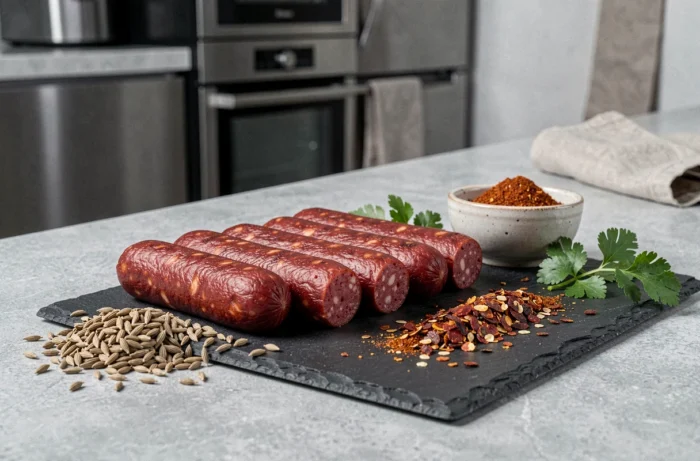
The meat-spice pairing does not work the same way depending on the chosen base. Here are the adjustments to make:
- For a lamb base, reduce the cumin and increase the sweet paprika. Lamb already has an aromatic power that can saturate the palate if the cumin is too present.
- For a dominant beef base, increase the cumin, ground coriander, and chili (mild or hot depending on the desired result). Beef absorbs spices without releasing them as intensely as lamb.
- For a pork or poultry base, add harissa or ras-el-hanout to compensate for the lack of character in the meat. A hint of crushed fresh garlic also enhances the overall flavor.
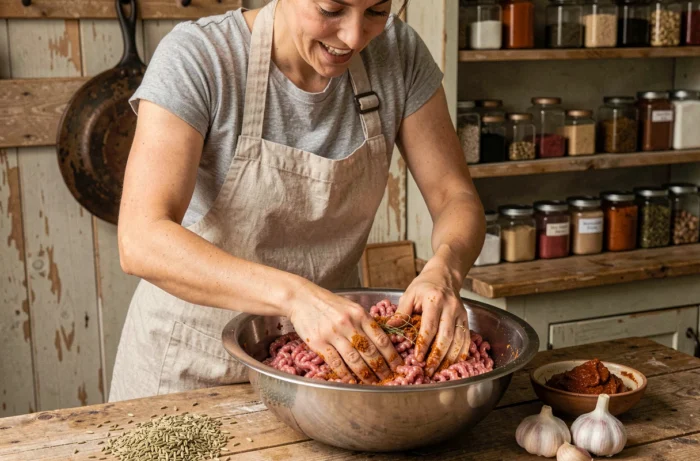
- Regardless of the mixture, let the seasoned mixture rest in the refrigerator for at least 12 hours before stuffing. This resting period allows the spices to penetrate the meat and the salt to begin structuring the proteins, which improves the casing’s stability during cooking.
Salt should be dosed between 18 and 22 g per kilogram of mixture. Below this, the merguez lacks cohesion and breaks down. Above this, the salty taste masks the spices.
Sheep casing and stuffing: the final link in quality
Natural sheep casing, size 20-24 mm, remains the reference for merguez. Finer than pork casing, it offers a crispy skin after cooking on the barbecue or in the pan and allows the meat’s aromas to express themselves. Collagen casings (artificial) work for bulk production but give a more rubbery texture, poorly suited for direct grilling.
When stuffing, avoid compressing the mixture too much in the casing. An overly dense merguez bursts during cooking because the internal steam has no space to distribute. A firm but not excessive stuffing ensures even cooking and a skin that remains intact.
The choice of meat conditions everything else, from spices to casing to cooking. A well-selected cut with the right fat ratio forgives many approximations in the subsequent steps. The opposite is never true.