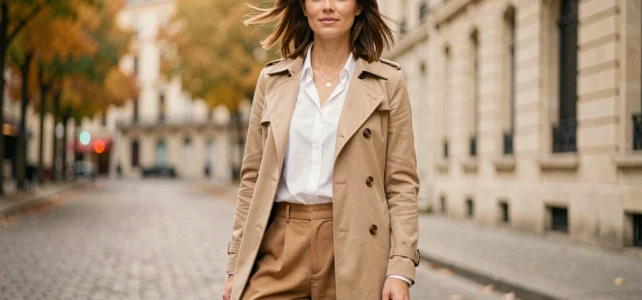
Personal style is defined by a set of recurring clothing choices that convey a stable visual identity. Far from a simple assembly of trendy pieces, it relies on concrete decisions: materials, cuts, color palette, coherence between life contexts. Building this foundation requires understanding a few precise mechanisms before composing outfits.
Signature color palette: the most underestimated lever of daily style
Choosing three to five recurring shades in your wardrobe radically changes the ease of getting dressed each morning. A signature color palette allows for assembling almost any combination of pieces without visual dissonance.
The principle is simple: identify a dominant neutral tone (navy, heather gray, ecru), a secondary tone that contrasts slightly, and one or two accent shades reserved for accessories or statement pieces. This system reduces impulsive purchases because it automatically filters what enters the wardrobe.
Many outfits published in the fashion section of Les Instants D’Une Blogueuse illustrate this logic of chromatic coherence applied to everyday looks, with reproducible shade combinations.
To test your palette, an effective method is to photograph your favorite outfits over an entire week, then observe the colors that recur. These are often the ones that match your complexion and lifestyle habits. Forcing a trendy color that doesn’t fit into this core produces the opposite effect: a fragmented look.
European regulation on unsold textiles and access to better-quality pieces
Since July 19, 2026, large fashion companies operating in the European Union are no longer allowed to destroy unsold clothing, shoes, and accessories. This ban stems from the Regulation on Ecodesign for Sustainable Products (ESPR).
Brands are now required to prioritize reuse, repair, recycling, donation, or resale through secondary channels. They must also publish an annual report detailing the volume of affected products and the treatments applied.
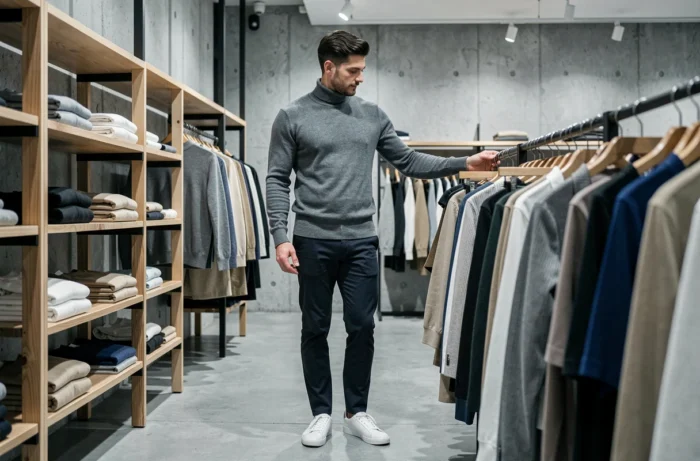
The direct consequence on daily style is tangible: the availability of discounted and quality second-hand stock is increasing. Outlets, resale platforms, and charities are receiving more pieces whose finishes, materials, and cuts exceed what fast fashion offers at the same price.
To affirm a coherent clothing style, this evolution opens up concrete access to better-constructed garments. A properly lined wool jacket or a dress with clean interior seams hangs better, lasts longer, and structures a look without extra effort.
Building a look around three key pieces rather than following fleeting fashion trends
The temptation to refresh your wardrobe every season results in a saturated closet where nothing combines. The opposite approach works better: identify three key pieces that serve as the foundation for the majority of outfits.
A key piece meets three specific criteria:
- It can be worn with at least five other garments already present in the wardrobe, without any particular coordination effort.
- Its cut remains flattering regardless of the context (office, weekend, casual outing), which increases its actual number of wears.
- Its material ages well after several washes, avoiding quick replacement and loss of fabric structure.
A thick crepe blazer, mid-rise cotton twill trousers, and a pair of slightly pointed ankle boots form an example of a key trio. Each piece works alone with a simple t-shirt or blouse, and together they create a structured look.
Testing versatility before purchase
In the fitting room or at home, a quick exercise is to mentally envision three different outfits incorporating the candidate piece. If three combinations don’t come to mind spontaneously, the piece is likely an impulse buy rather than a style investment.
Accessories and finishing details: what differentiates an outfit from a random assembly
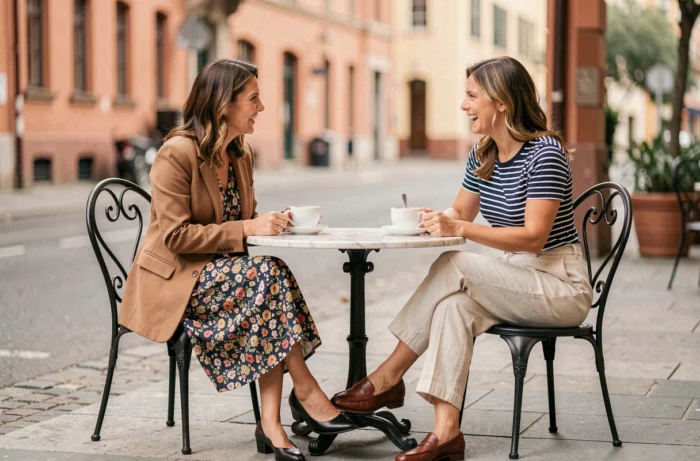
Accessories do not serve to decorate an outfit. They alter its interpretation. A belt that cinches the waist restructures the silhouette of a straight dress. A fine-dial watch on a bare wrist provides a subtle focal point that anchors the gaze.
The common trap is accumulation. A single visible accessory is enough to direct the style of an outfit. Layering necklaces, rings, scarves, and statement bags dilutes the impact of each. The result appears cluttered without being readable.
Here are the accessories that offer the best leverage on a daily look:
- A leather belt with a slightly assertive buckle, worn over trousers or a flowy dress, creating a clean waistline.
- A medium-sized structured bag, in a tone consistent with the signature palette, avoiding the “utility bag” effect without tipping into evening bag territory.
- Simple geometric earrings that frame the face and work well with both a turtleneck and a boat neck.
Shoes and silhouette consistency
The choice of shoes determines the overall line of the look. Wide trousers worn with chunky sneakers create a low volume that weighs down the silhouette. The same trousers with pointed-toe mules visually elongate the leg. This interaction between trouser hem and shoe is the most determining finishing detail in a daily outfit.
Affirming your style does not come from multiplying purchases or mechanically following seasonal fashion trends. The combination of a mastered color palette, tested key pieces for their versatility, and carefully chosen accessories creates a functional wardrobe where each outfit has a clear intention. The increasing access to better-quality clothing through second-hand and clearance channels makes this approach more accessible than ever.