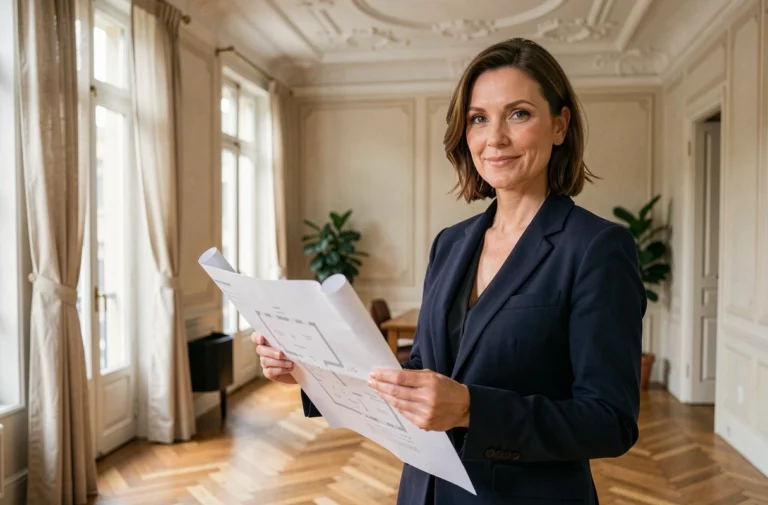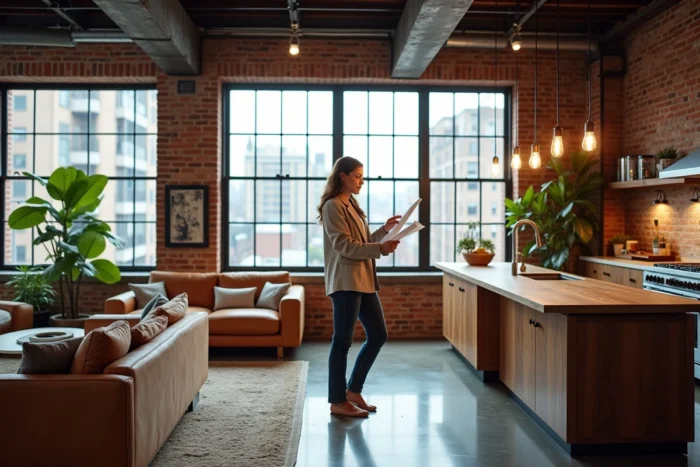
The French real estate market is undergoing a phase of restructuring where standard properties sometimes struggle to find buyers, while a parallel segment attracts a targeted clientele: atypical real estate. Industrial lofts, houseboats, renovated barns, former shops converted into mixed-use housing – these properties fall outside traditional evaluation grids and raise specific questions regarding financing, regulatory compliance, and resale.
Energy standards and old atypical properties: an underestimated obstacle
The DPE schedule, which gradually prohibits the rental of energy-inefficient properties classified as G and then F, hits atypical properties harder than the standard residential stock. A loft in an old warehouse with glass walls across the entire facade or a stone barn with cathedral-like volumes presents thermal challenges that standard insulation does not resolve.
The necessary work on these buildings (raising the roof, treating large glass surfaces, insulating thick stone walls) is technically complex and significantly more expensive than for a standard apartment. Several industry professionals have reported since 2024 stronger negotiations on poorly rated atypical properties in the DPE, with a notable extension of sale timelines for those that have not been energy renovated.
This constraint creates a paradoxical situation: properties with remarkable architectural charm become difficult to market because they do not fit into regulatory boxes. For buyers, it is a negotiation window. For sellers, it is an expense to anticipate even before putting the property on the market. The listings published on the real estate category on Atypique Info illustrate this diversity of situations between renovated properties and those needing complete refurbishment.
Hybrid residential-activity properties: the growing segment
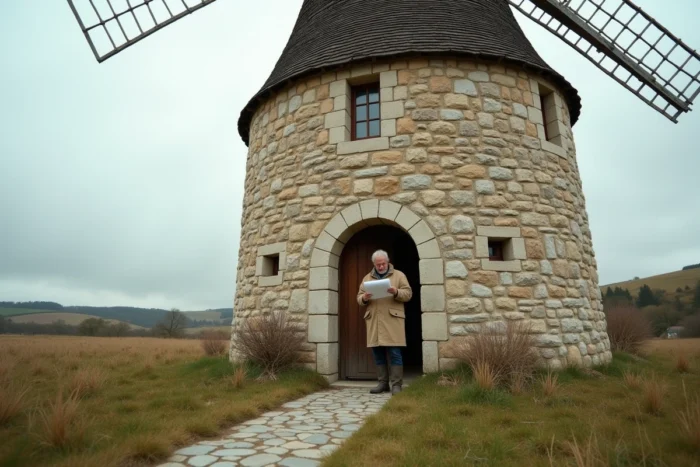
Since 2024, a specific demand has emerged for atypical properties that allow for a combination of living space and professional area. We are talking about former commercial premises transformed into housing with an adjoining artist’s studio, warehouses rehabilitated into mixed third places, or lofts incorporating a paramedical office or a creative studio.
This residential-activity hybridization represents a growth driver in markets where pure residential is slowing down, particularly in large metropolitan areas and medium-sized cities undergoing industrial conversion. The profile of buyers has changed: they are no longer just looking for an original home, but a space that accommodates multiple functions of their daily life.
There are still many points of caution:
- The change of use of the property must be authorized by the town hall, and the rules vary greatly from one municipality to another, especially in Paris where compensation is often required
- The property insurance must cover the professional activity conducted, which alters the contract and the premium
- The resale of a hybrid property targets a more limited pool of buyers, which can extend transaction timelines
Field feedback varies on the actual added value of these properties in the medium term. In some medium-sized cities, the demand for these mixed spaces remains fragile and depends on the local economic dynamics.
Illiquidity and valuation: the real risk of atypical real estate
An atypical property cannot be compared to anything else. This is precisely what attracts buyers, and what complicates the transaction. In the high-end market in particular, the sale timelines for atypical properties far exceed those of standard residential. The pool of potential buyers is inherently narrow: a houseboat in Paris or a mill in Dordogne does not appeal to the same audience as a three-room apartment in the city center.
Valuation poses a structural problem. Notarial databases, which serve as references for price per square meter, do not work well with properties without equivalents. An old glass workshop converted into a loft has no direct comparable. The evaluation then relies more on market sentiment and the individual expertise of the agent than on objective data.
Bank financing: more scrutinized files
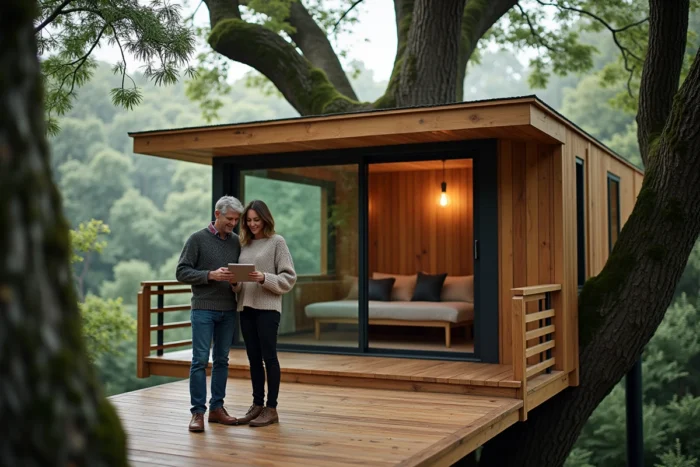
Banks analyze these files with increased caution. A property that is difficult to estimate is a property that is difficult to mortgage. The lending institution often requires an additional appraisal, sometimes at the buyer’s expense, to validate the retained value. Properties without traditional foundations (tiny houses, homes on water, modular constructions) raise additional questions about real guarantees.
For short-term rental investment, the theoretical profitability of an atypical property may seem attractive due to the “coup de cœur” effect on booking platforms. The available data does not allow for conclusions about the sustainability of this profitability, especially as local regulations on seasonal rentals are tightening in many municipalities.
Buying strategy in atypical real estate: three checks before signing the compromise
Buying an atypical property requires a longer search and a higher level of verification than a standard transaction. Three points deserve particular attention before signing the sales agreement:
- Urban planning compliance: check that the property is properly registered as a residence (or that the change of use has been obtained), that previous works were subject to permits, and that the local urban planning plan allows for the intended use
- The actual technical condition: for an old converted building, standard diagnostics (asbestos, lead, termites) are not always sufficient – an independent structural assessment can identify specific pathologies related to the type of construction
- The resale projection: a property without comparables sells only at the price the market accepts on the day of sale, which makes the added value uncertain
The market for atypical spaces in France remains a micro-market where patience is as much a variable in the transaction as price. The most sought-after properties combine a clear location (proximity to a train station, city center, or tourist hub) with strong architectural character. Those that combine geographical remoteness and technical complexity remain the longest to sell, regardless of their aesthetic potential.