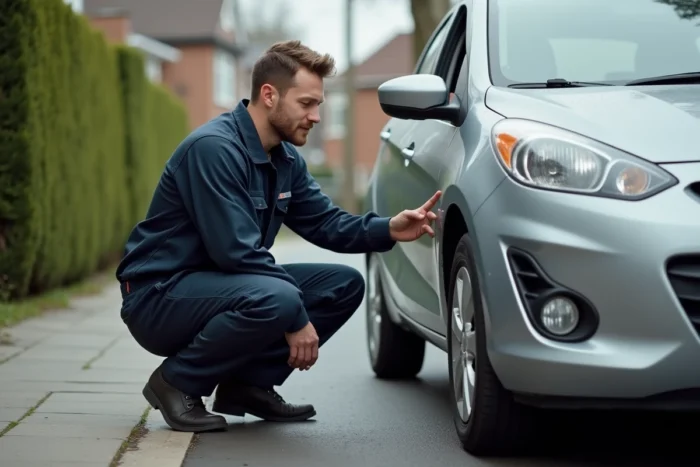
The French vehicle fleet is aging. The average age of vehicles on the road now exceeds a decade, and motorists are keeping their cars longer than before. This context raises two concrete questions: how to choose a vehicle suited to one’s actual use, and how to maintain its mechanical condition without incurring unnecessary expenses. The answers vary depending on the type of engine, annual mileage, and tracking tools used.
Digital Maintenance Log: A Tool That Changes Vehicle Management
Classic guides list operations to be performed (oil change, tires, brakes) without addressing how to plan them over time. The difficulty is not knowing that the engine oil level needs to be checked, but rather not forgetting to do it at the right time.
Applications like Drivvo allow users to record each intervention: oil changes, filter replacements, tire changes, fuel fill-ups. They automatically calculate costs and trigger alerts before deadlines. For those who own multiple vehicles, this type of tool centralizes tracking in a single interface.
The main interest is to replace paper invoices with a structured history. When reselling, a complete digital log reassures the buyer and justifies a higher price. In case of disputes after purchasing a used vehicle, this history also serves as proof of regular maintenance. To delve deeper into the criteria for choosing a vehicle and good mechanical practices, a car guide on Expert Auto Moto details the points to check before and after the purchase.
Electric Car Maintenance: What Really Differs from Combustion Engines
Electric vehicles (Renault Zoé, Peugeot e-208, Citroën e-C4, BMW i3, Nissan Leaf) have longer service intervals than combustion models. Manufacturers often recommend a service every two years or every 30,000 km, compared to once a year for a gasoline or diesel engine.
The absence of oil changes, timing belts, and clutches reduces the number of common operations. However, electronic diagnostics play a central role. The thermal management of the battery and the monitoring of the air conditioning system are the two areas to prioritize, as they directly influence the battery’s longevity.
Good Charging Practices for Daily Use
Recent recommendations emphasize simple yet crucial habits:
- Avoid complete battery discharges, which accelerate its chemical degradation. Maintaining the charge between 20% and 80% prolongs its lifespan.
- Prefer slow or accelerated charging rather than systematic fast charging, which generates more heat in the cells.
- Regularly check the air conditioning system, which plays a direct role in cooling the battery, not just in passenger comfort.
A poorly charged electric vehicle ages faster than a mechanically well-maintained one. Field reports vary on the actual lifespan of batteries depending on the models, but charging practices remain the factor over which the driver has the most control.
Levels and Fluids: Checks That Prevent Costly Breakdowns
Checking fluid levels requires neither mechanical skill nor special tools. The problem is that most motorists wait for the warning light, while some damage may already be occurring at that stage.
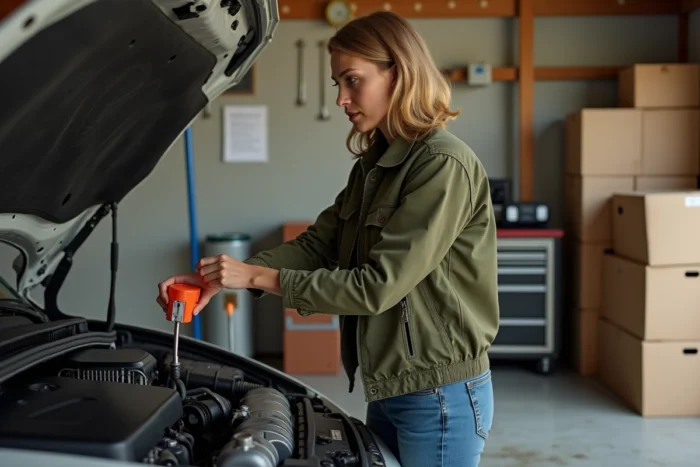
The engine oil level should be checked when cold, on a flat surface. Oil that is too low can cause overheating and premature wear of internal parts. Coolant, brake fluid, and power steering fluid deserve a visual check at least once a month.
Brake fluid absorbs moisture over time, which reduces its effectiveness. Manufacturer recommendations indicate a replacement interval, but degraded brake fluid compromises braking safety well before the theoretical date. If in doubt about its color (it should remain clear), a professional can test its moisture level in a few minutes.

Choosing a Used Car: The Pitfalls That the Technical Inspection Doesn’t Cover
The technical inspection checks a number of regulatory points, but it does not cover the condition of the gearbox, internal engine wear, or the quality of past maintenance. A vehicle can receive a favorable opinion while still presenting latent mechanical issues.
During the test drive, three elements provide reliable information about the actual condition of the vehicle:
- The behavior of the gearbox when cold: creaking or difficult shifts indicate advanced wear of the synchronization.
- The color of the exhaust smoke at startup: blue smoke indicates abnormal oil consumption, while persistent white smoke may reveal a failing head gasket.
- The condition of the tires: asymmetric wear reveals a geometry or suspension defect that the owner has not corrected.
The maintenance log (paper or digital) remains the best indicator of how the vehicle has been treated. A patchy history, even on a recent car, should prompt caution.
Car Maintenance Budget: What Manufacturer Intervals Don’t Tell You
The manufacturer’s recommendations correspond to standard usage conditions. A vehicle primarily used in the city, with short and frequent trips, puts more strain on certain components (clutch, brakes, particulate filter) than a vehicle driving on roads or highways.
Adapting the maintenance rhythm to actual use helps avoid two pitfalls: neglecting a part that wears out faster than expected, or prematurely replacing a component that is still functional. The available data do not allow for a reliable average cost, as the discrepancies vary by model, mileage, and region.
A rigorous follow-up via a dedicated app or a simple table (date, mileage, operation, cost) transforms maintenance into a predictable expense rather than a series of unpleasant surprises. The best-maintained vehicle is not the one that goes to the garage most often, but the one whose owner knows precisely its mechanical condition at every moment.